Story by Andrew Holland / December 5, 2025
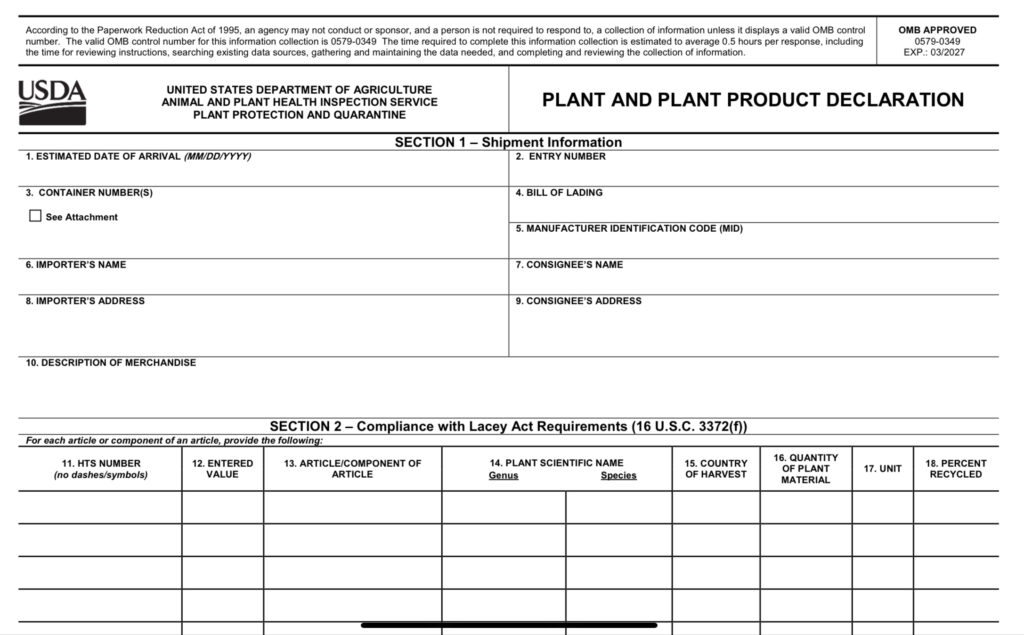
For decades, the importation of foreign-built recreational vessels into the U.S. was governed by simple customs protocol: pay the assessed duty and secure your Entry Summary (Form 7501). That straightforward era ended with the 2008 amendment to the Lacey Act. This once-obscure conservation statute has evolved into a formidable barrier, introducing a critical layer of environmental traceability that is now catching the marine industry—from sellers to brokers—completely unprepared.
If your acquisition strategy involves importing a vessel from builders like Lagoon, Fountaine Pajot, Leopard, Bali, or any other global manufacturer, you must internalize the Lacey Act’s compliance burden immediately. Failure to do so will directly compromise your ability to achieve legal U.S. entry.
Initially established in 1900 to combat illegal wildlife trade, the Lacey Act was fundamentally altered in 2008 to include plants and plant products, specifically timber and wood-based goods. This critical expansion means the law now criminalizes the importation of any product derived from illegally sourced wood.
The U.S. Department of Agriculture’s Animal and Plant Health Inspection Service (APHIS) implemented a phased rollout, culminating in the application of these strict requirements to the marine industry starting in December 2024. The legislation’s intent is to curb global illegal logging, but its scope now impacts everything containing wood fiber, from furniture to the structural components of your vessel.
The musical instrument industry provided the early and expensive lessons in Lacey Act enforcement. The penalties levied against companies like Gibson Guitars—which faced federal raids and over $600,000 in fines and forfeitures for documentation deficiencies—underscore a critical point: The law punishes missing or insufficient paperwork, irrespective of the actual legality of the wood harvest years ago.
Today, this exact compliance pressure is targeting the boating sector. Foreign-built catamarans, constructed with woods sourced globally for everything from cosmetic veneers to structural marine plywood, are particularly vulnerable.
Effective December 2024, the process requires more than duty payment. Importers must now file a Lacey Act Declaration (Form PPQ 505) for their vessel. This form demands granular, verifiable data that most secondary owners or non-specialized brokers cannot possibly provide:
If the original manufacturer cannot furnish a complete, legally compliant traceability report detailing the sourcing of all wood components—including veneers, marine plywood, and structural blocks—the importer cannot successfully file the PPQ 505. Without that filing, legal importation into the U.S. is blocked, regardless of paid duties.
The greatest vulnerability lies with older vessels. The European Union’s equivalent regulation, the EU Timber Regulation (EUTR), only took effect in March 2013. Manufacturers operating before this date had no regulatory mandate to maintain the hyper-detailed wood sourcing records now required by U.S. law.
Crucially, the Lacey Act operates without a grandfather clause. An imported boat built in 2005 is held to the exact same documentation standard as a new build delivered today. If the original builder’s records are insufficient or nonexistent, the vessel is effectively rendered non-importable.
Note on Pre-Rollout Immunity: A critical exception exists. If a foreign-built vessel was formally imported into the U.S. prior to the December 2024 Phase VII marine industry rollout, it is considered grandfathered and exempt from the Lacey Act filing requirement for subsequent domestic sale. This status adds a demonstrable premium to the vessel’s value in the U.S. market.
The Lacey Act is not merely just a logistical challenge It is a codified federal environmental mandate. For the sailing catamaran market, compliance is now the gateway to legal ownership. Due diligence must extend beyond the physical survey to include a thorough investigation of the vessel’s complete supply chain documentation.
More Questions on the Lacey Act Provision or completing the necessary paperwork to complete a vessel importation? Contact us today for further assistance.
We had an outstanding experience working with Andrew Hodgdon to find our dream boat, an Outremer 52.
We were actually referred to him by several different people—clients who had been very happy working with him, as well as boat owners who were planning to use him to sell their own boats. After working with Andrew ourselves, we completely understand why he came so highly recommended.
We worked with him for several months, and from start to finish, he was exceptional. Andrew is incredibly knowledgeable and truly an expert when it comes to performance catamarans. He took the time to understand exactly what we were looking for, was always responsive and organized, and never made us feel pressured throughout the process.
Andrew went above and beyond to arrange showings for us in multiple states and even traveled to another state to be there with us for the sea trial. His expertise and guidance gave us tremendous confidence as we evaluated such a significant purchase.
The entire process could have been overwhelming, but he made it remarkably smooth. He was on top of every detail and made the paperwork and closing process easy, working seamlessly with his team at The Multihull Company.
What impressed us most was that he genuinely had our best interests in mind. And his support didn’t end when the sale was completed. He has continued to stay in touch and has made it clear that he is still available to help us if we ever need him. That kind of follow-through is rare and speaks volumes about the kind of broker he is.
Buying an Outremer 52 was a huge decision and a major investment, and having someone with his knowledge, experience, responsiveness, and integrity made the entire experience so much easier and more enjoyable.
We couldn’t recommend Andrew Hodgdon more highly. If you’re looking for a yacht broker—especially if you’re considering a performance catamaran—we would choose him again without hesitation. The fact that so many people recommended him to us was the reason we called him, and after working with him, we would be one of those people recommending him to others.
I highly recommend Andrew Hodgdon. He served as our buyers broker. He is responsive, highly knowledgeable and very experienced. He is also an excellent guide and counselor before, during and after the boat purchase process. If you are looking for a good-sailing cat, he seems to collect most of the available boats on the better-sailing side of the market. Top marks.
Andrew did an excellent job getting me started on my new adventures. Worked with my conflicting schedule. Is very knowledgeable in the catamaran industry. 😎
I recently sold my Lagoon 450 with the Multihull Team. I would highly recommend their services. The professionalism and personal treatment I received was greatly appreciated.
Great Service, Great People
Helped me through the process.
I would go through them again in a future purchase.
Successful relationships cannot exist without it. At The Multihull Company we base every relationship on a firm commitment to earning and retaining our client’s trust.
Advice of any kind is valuable only when grounded in hard-won expertise. It too, must be trustworthy. Trust and expertise define the heart and soul of The Multihull Company. We are a team of skilled professionals who thrive on providing expert, trustworthy advice and service to catamaran and trimaran sailors around the globe.
More About Multihull